“Those who cannot remember the past are condemned to repeat it” is a famous 1905 aphorism by philosopher George Santayana. Its meaning is that understanding history is a key to progress.
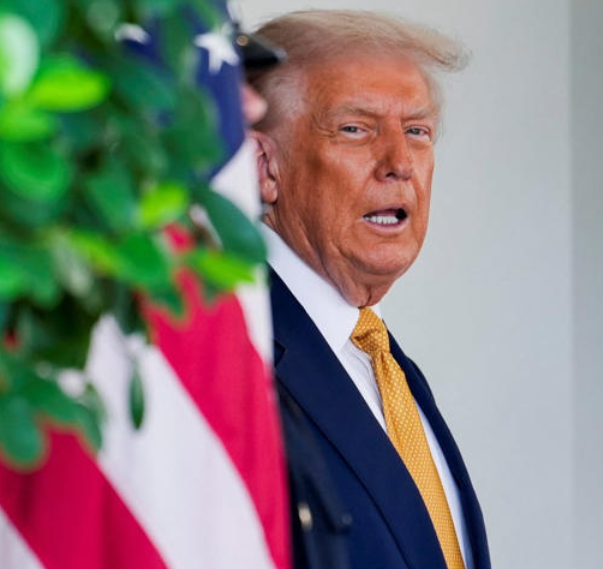
A recent Washington Post story shows that efforts to remake the Smithsonian museum system are being pushed by the Trump administration. Their goal is to adjust what are termed “divisive narratives” and “improper ideology.”
Salon senior writer Chauncey DeVega contends such efforts are an attempt to control the past as a way to win the present and command the future.
“These types of bad actors will never be satisfied in their quest to remake society in their ideological and personal image,” DeVenga argues. “This explains why authoritarians and other enemies of democracy systematically target schools, universities, science, the arts, libraries, the independent news media and Fourth Estate, museums — anywhere knowledge is produced and critical thinking is taught. To control society, you must first control how people think.”
The Smithsonian previously removed references to Trump’s impeachment and role in the Jan. 6 uprising from the National Portrait Gallery. But recently, 64-year-old historian James Millward fought back, handing out printouts in the museum that stated that Trump was “impeached twice, on charges of abuse of power and incitement of insurrection.”
Millward knew that he was kicking a hornet’s nest. He’s a cofounder of Citizen Historians for the Smithsonian, an organization which “spent thousands of hours documenting every corner of the [museums] to document the changes being made under pressure from the administration.”
The museum sent armed guards to deal with him. The guards claimed that handing out literature and protesting in the museum was forbidden. They closed the gallery and sent him on his way.
DeVega noted, “What’s happening at the Smithsonian is part of a larger project in which Trump and the larger white-right want to create a fictionalized version of American history and life, where the only people who have a legitimate claim on the country are wealthy white men.” Others, DeVega said, “are at best a supporting cast. At worst, they are erased entirely, or cast as the anti-citizen, the Other, the enemy.”
Thus, the Civil Rights Movement for Blacks, women and LGBTQ, the labor movement and other challenges to authority are “distorted or ignored. They must be deleted, distorted or ignored. A usable past is a dangerous past,” DeVega argues.
Attempting to rewrite the past is a sign of weakness, DeVega concludes. He turned to Henry Giroux, social theorist and author of “Assassins of Memory,” a book that examines the politics of erasure,to underline that point.
“Only a regime uncertain of its legitimacy must police the past so aggressively,” Giroux said. “Authoritarian regimes — the Nazis, Stalin, Pinochet — have always understood that memory, culture, and education are crucial battlegrounds. Each appeared omnipotent, yet their obsession with silencing historians and artists revealed a profound fragility. Only insecure power fears memory.”
In the future, DeVega says, “resistance against Trumpism could very well mean taking photos of truth-telling exhibits before they are whitewashed or removed, hiding banned books and so-called degenerate art and secreting away important historical, cultural and artistic materials the regime wants erased. In ways small and large, the American people will have to become protectors of truth and reality itself.
“James Millward showed us what that looks like. He knows that democracy is not an abstraction. It is something we do and live.”