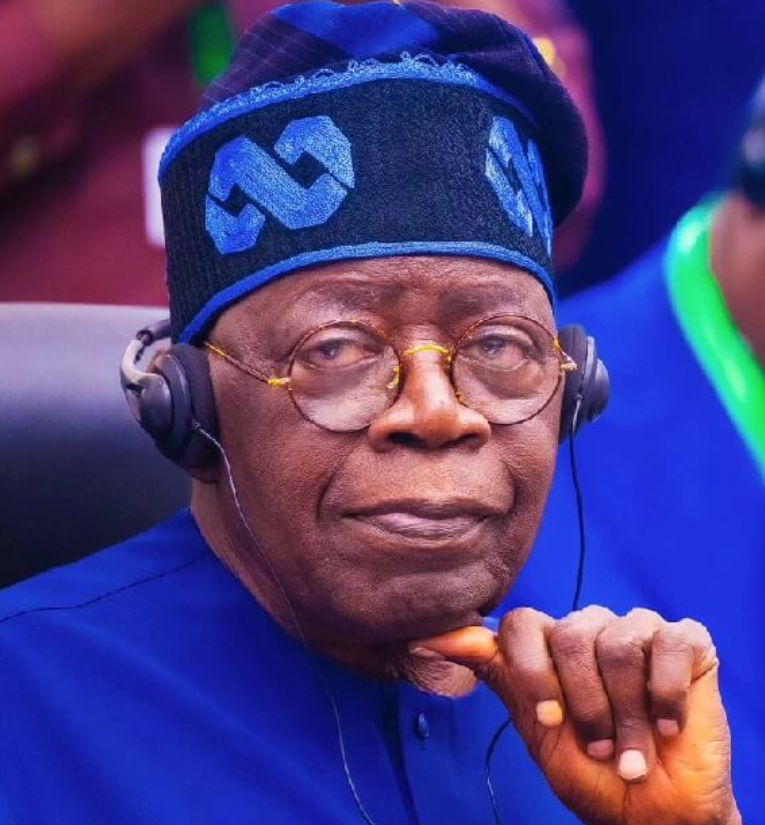
India and some other countries have reportedly declined to accept ambassadors-designate nominated by President Bola Tinubu, citing diplomatic policies that discourage receiving envoys from governments with less than two years remaining in office.
According to Punch, multiple senior officials within the Presidency and the foreign service disclosed on Tuesday that India has a standing policy against accepting ambassadors from administrations nearing the end of their tenure.
One of the nominees affected is career diplomat Ambassador Muhammad Dahiru, who was recently posted to New Delhi.
According to a Presidency official familiar with the development, India has already signalled reluctance to grant agrément, the formal approval required from a receiving country before a diplomat can assume duty.
“They don’t accept an ambassador from an administration that has less than two years in office. So they are giving us that body language already,” the official said.
The source added that the hesitation was not necessarily about the individuals nominated but the limited time remaining in the current administration.
“Some countries are reluctant to accept some people, not because of the individuals but because of time. They are already seeing the Tinubu government as an outgoing government.
“So their concern is that he has just one year left, so what if he doesn’t win the election? Another government may come and remove them.
“We also understand that some countries have this policy. Any ambassador from an administration that has less than a year or two in office will not get accepted. And one of such countries is India,” the official said.
Another senior foreign service official confirmed India’s position but expressed optimism that Nigeria might secure an exception due to the strong bilateral relationship between both countries.
“I know India has that policy. If you are less than two years to the end of the tenure, there will be difficulties accepting an ambassador. Maybe we can leverage our relationship with them to scale through that,” the official said.
He added that the government may also argue that the ruling party stands a strong chance in the next election.
“Of course, there are those among them who gauge political tides, and some may see that this government can win the next election. Perhaps they may see that the election may not be so competitive because virtually everybody has moved towards the APC. They may say the chances for APC’s victory are high. That is one of the arguments the government will push forward,” the official said.
The source, however, noted that while India’s position is confirmed, other countries could adopt similar conventions.
“India is the only one I can confirm to you for now. The others will be based on their conventions and practices. But the one I know for sure now is India. We will have to do a lot of convincing because they have a standing rule,” he said.
A third official disclosed that although the Ministry of Foreign Affairs has secured funding for the mandatory induction programme for ambassadors-designate, the training schedule has not yet been fixed.
“On the training, we don’t know when for now. But the Foreign Ministry has the funds already to undertake the induction course,” the source said.
LEADERSHIP reports that President Tinubu approved the appointment of 65 ambassadors-designate and high commissioners on March 6 to represent Nigeria in various countries and international organisations.
Among those nominated are former Minister of Aviation Femi Fani-Kayode (Germany), presidential aide Reno Omokri (Mexico), Abdulrahman Dambazau (China), and Senator Jimoh Ibrahim, who was nominated as Nigeria’s Permanent Representative to the United Nations.
So far, only the United Kingdom and France have granted agrément to Nigeria’s nominees, High Commissioner-designate Aminu Dalhatu and Ambassador Ayodele Oke respectively, leaving the fate of the remaining envoys uncertain.
The situation may delay the government’s efforts to restore full diplomatic representation across Nigeria’s 109 foreign missions.
Nigeria has been without substantive heads of mission since September 2023, when the administration recalled all 83 career and non-career ambassadors shortly after assuming office.
Under the Vienna Convention on Diplomatic Relations adopted in 1961, receiving states must formally consent before an ambassador can be accredited.
A former Nigerian envoy to Singapore, Ambassador Ogbole Amedu-Ode, described the position of receiving countries as pragmatic given Nigeria’s approaching election cycle.
“The underlying word here is pragmatism. Those receiving states are just being pragmatic if they take that view because the next round of general elections is in a year from now.
“The question is now about an envoy from a president who is facing an election in a year. Elections, no matter how we think we understand them, can go either way.
“So, why receive letters of credence from a principal envoy from a President who has just one year and some months remaining for his first term in office? So, they may dilly-dally in issuing an agrément,” he said.
He also criticised the delay in appointing ambassadors.
“The mistake has been made by the current administration already because they shouldn’t have waited two to three years into their term before nomination, screening, and deployment of heads of missions,” Amedu-Ode said.
Another former Nigerian ambassador to Algeria, Mohammed Mabdul, said outright rejection of Nigerian nominees by friendly countries was unlikely but noted that political appointees might face greater scrutiny.
“The political appointees are the problem. Once received and accredited, they are usually expected to remain for two to three years.
“But with the next election in just a year now, there is the possibility that they may start returning to participate in campaigns. So, they may not make any serious impact with their posting,” Mabdul said.
The Independent National Electoral Commission has scheduled Nigeria’s next presidential election for January 16, 2027, while President Tinubu’s first term is expected to end in May of the same year.
The diplomatic setback came despite efforts by the Tinubu administration to strengthen ties with India. The President visited India in September 2023 for the G20 Summit and held bilateral talks with Prime Minister Narendra Modi.
In November 2024, Modi also visited Nigeria, the first trip by an Indian prime minister to the country in 17 years — during which both nations signed several agreements covering cultural exchange, customs cooperation and other areas of strategic partnership.