A war thousands of kilometres away is about to hit African wallets again. Within hours of US-led airstrikes on Iran on 28 February, Brent crude jumped from $67 to above $82 a barrel, a surge of more than 20% in days, before easing slightly. It was the sharpest spike since the 2022 Russia-Ukraine invasion.
Oil prices surged above $80 after renewed US–Iran tensions raised fears of disruption in the Strait of Hormuz, a route that carries about 20% of global supply.For Africa’s fuel-importing economies, the spike threatens weaker currencies, rising pump prices and a fresh wave of inflation.Even oil producers like Nigeria face a paradox: higher state revenues alongside higher consumer fuel costs.If crude moves towards $100 and stays elevated, the shock could slow growth, widen deficits and strain already fragile public finances across the continent.
For much of Africa, that jump translates almost directly into higher petrol prices, rising transport fares and renewed food inflation.
The confrontation between Washington, Israel and Tehran has now shifted from military escalation to economic fallout. And Africa sits on the fault line.
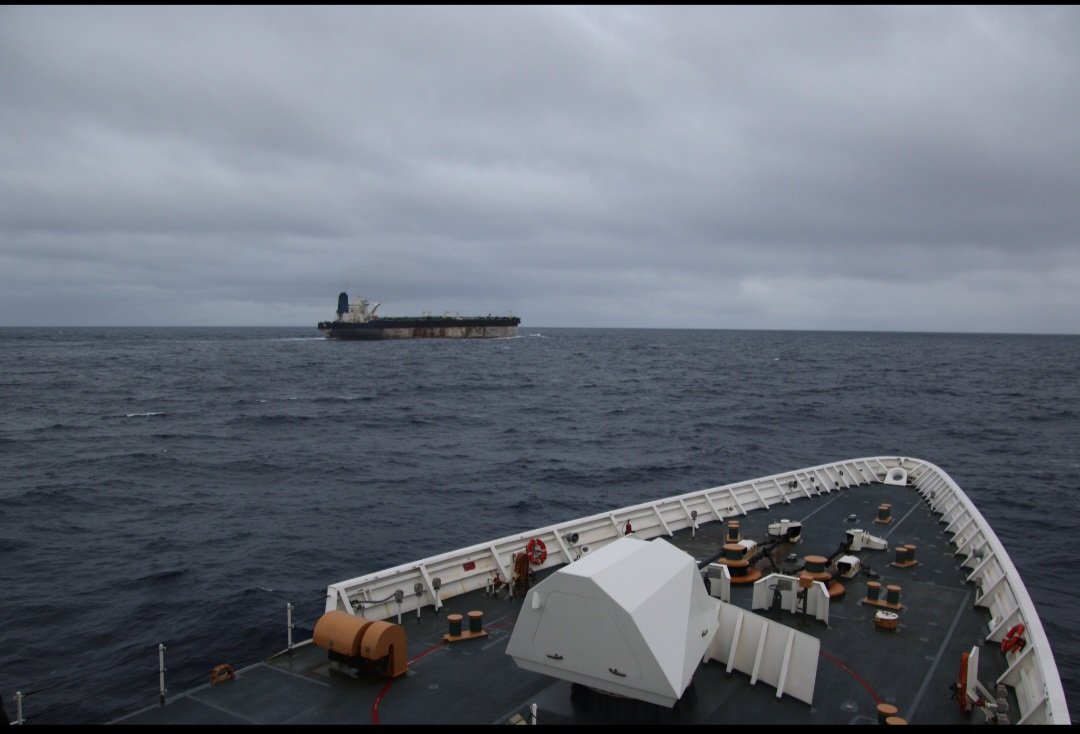
At the centre of the crisis is the, the narrow waterway between Oman and Iran that carries roughly one-fifth of the world’s oil supply.
If tanker traffic slows or insurance costs surge, global supply tightens almost immediately. Analysts warn that if flows are disrupted for more than a few days, crude could climb towards $100 or even $120 a barrel.
That would not just be an oil story. It would become an inflation story.
Multiple ships came under attack near the Strait of Hormuz on Sunday.Photo by Giuseppe CACACE/AFP via Getty Images
Why Africa feels oil shocks faster
Most African countries import refined petroleum products, which means movements in global crude prices transmit quickly into domestic economies.
According to the President/Chief Executive, Dangote Industries Limited, Aliko Dangote,Africa imports over 120 million tonnes of refined petroleum products annually, at a cost of approximately $90 billion.
When oil prices rise, governments require more dollars to finance fuel imports, putting pressure on foreign exchange reserves and weakening local currencies. A softer currency then makes those same imports even more expensive, amplifying the shock.
The effect does not stop at the petrol station. Higher import costs push pump prices upward, and within weeks transport fares increase, food distribution becomes more expensive, and inflation begins to edge higher.
For households and small businesses, the impact feels less like a market fluctuation and more like an unavoidable levy on daily life, effectively a silent tax imposed by global events beyond their control.
The African Union has warned that the escalation threatens energy markets and food security. Its chairperson, Mahmoud Ali Youssouf, called for “restraint, urgent de-escalation, and sustained dialogue.”
But financial markets rarely wait for diplomacy to take effect, and prices often adjust long before political solutions emerge.
Inflation risks return
We are already seeing this in South Africa. The rand slipped as investors sought safer assets. Economists say sustained oil above $80 could reverse recent progress on inflation.
Higher fuel prices would filter into transport, agriculture and manufacturing, narrowing the room for interest rate cuts and putting pressure on consumers already dealing with high electricity costs.
If oil moves toward $100, policymakers could face renewed stagflation risks: weak growth combined with rising prices.
A general view of Dangote Petroleum Refinery Petrochemicals in Lagos, on May 22, 2023. [Photo by PIUS UTOMI EKPEI/AFP via Getty Images]
Nigeria’s oil paradox/the Dangote question
Nigeria faces a complicated equation.
On paper, higher crude prices should lift government revenues. Oil exports account for the bulk of foreign exchange earnings, so if prices hold above $80 per barrel, fiscal receipts and external reserves could improve.
But the domestic picture is less straightforward. Nigeria still imports a significant share of its refined fuel, meaning global price increases quickly translate into higher local pump prices. Consumers therefore feel the shock even when the state benefits from stronger crude earnings.
The situation also raises a key commercial question: how might sustained higher crude prices affect sales from the Dangote Refinery?
Dangote refines about 18 million barrels of crude monthly, most of which is imported, with a smaller portion supplied by the Nigerian National Petroleum Company Limited.
If international crude prices remain high, the refinery’s input costs rise. That could push domestic petrol prices higher unless margins are compressed.
At the same time, higher global product prices may make exports more attractive, potentially influencing how much refined fuel is sold locally versus abroad.
Olatide Jeremiah, CEO of Petroleumprice, highlighted the structural contradiction. As reported by Punch, he said, “Nigeria is the largest crude oil producer in Africa and at the same time hosts the biggest refinery on the continent.” Yet imported products still account for a meaningful portion of national consumption.
He warned that Nigerians should brace for higher fuel prices in coming days.
In effect, Nigeria’s oil windfall may coexist with rising living costs. Government revenues could strengthen, but household budgets may tighten, reviving inflationary pressures that had only recently begun to stabilise. Whether expanded domestic refining capacity can cushion future shocks remains one of the most closely watched questions for policymakers and investors alike.
In and East Africa’s neighbouring markets, analysts expect fuel price increases of around 100 shillings per litre if global prices remain elevated.
For landlocked economies that depend heavily on imported fuel transported over long distances, oil shocks hit particularly hard. Trade slows. Transport costs surge. Consumer spending weakens.
Investors are watching two things
For African markets, the crisis now hinges on two closely linked variables: whether tanker flows through the Gulf resume and remain stable, and whether oil prices settle below $90 per barrel or accelerate towards triple-digit territory.
The first determines the physical supply risk; the second shapes inflation expectations, currency stability and monetary policy decisions across the continent.
If the conflict drags on for months and supply disruptions persist, economists warn of broader global slowdown risks.
Prolonged high energy costs would weigh on growth forecasts, widen fiscal deficits and add strain to already stretched public debt positions in several African economies, many of which are still navigating fragile post-pandemic recoveries and tight financing conditions.
Professor Raymond Parsons of North West University warned:
“The biggest immediate impact for countries like South Africa will inevitably be the elevated uncertainty about global oil prices, and hence the prospect of higher fuel costs in the months ahead. Oil prices are widely expected to spike in the short-term and stay high for a period – depending on the outcome of the war and in the absence of any new supply measures to offset higher oil prices.”
A familiar lesson, still unresolved
Every major geopolitical conflict over the past two decades has exposed the same vulnerability: Africa remains deeply exposed to external energy shocks.
Some argue this moment could accelerate investment in renewables and domestic refining capacity. But structural reforms take years.
Oil shocks travel in days.
And as tankers hesitate in the Gulf and markets reprice risk, one reality is becoming clear: if crude holds above $80 or climbs higher African consumers will feel the impact long before the war ends.