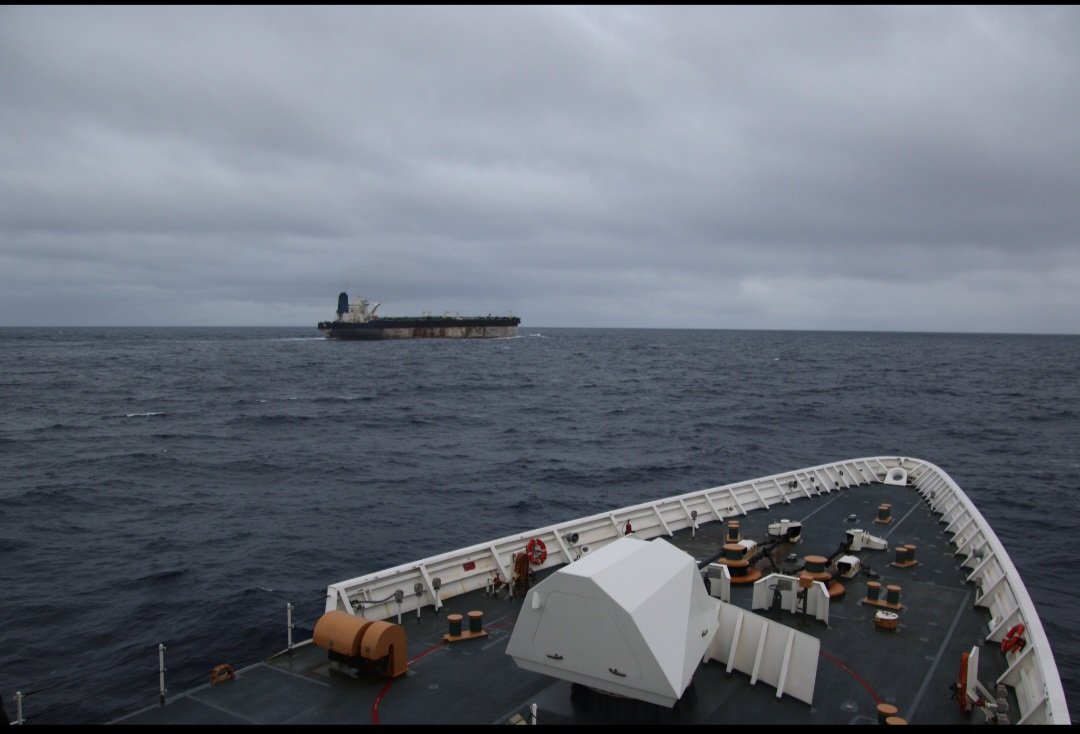
Fresh turmoil in the Middle East is once again redrawing global trade and aviation maps, pushing shipping lines and airlines back toward longer and costlier Africa-bound routes.
Fresh conflict in the Middle East is forcing shipping lines and airlines to reroute via Africa, raising costs and transit times.Maersk is redirecting vessels around the Cape of Good Hope, abandoning the Suez Canal due to new constraints in the Red Sea region.Air travel across the Middle East is severely disrupted, with airspace closures in the UAE, Iran, and other countries halting major airport operations and grounding flights.Airlines including BA, Lufthansa, and Air India are cancelling or rerouting flights to avoid conflict zones, using longer routes over Oman, Saudi Arabia, Egypt, and Africa.
Denmark’s shipping giant Maersk said Friday it will temporarily reroute some sailings around the Cape of Good Hope, avoiding the Suez Canal after encountering what it described as “unforeseen constraints” in the Red Sea region.
The move marks a setback. Just last month, the world’s second-largest container carrier had begun a gradual return to the Suez route, a corridor seen as critical to easing two years of supply chain disruption triggered by attacks on vessels by Yemen’s Houthi rebels.
“After conversations with our security partners, it is clear that these constraints are making it challenging to avoid delays in regard to passage through the area,” Maersk said in a statement, without elaborating further.
The renewed detour around southern Africa comes as air travel across the Middle East faces severe disruption following ongoing US and Israeli strikes on Iran and retaliatory actions across the region.
According to FlightRadar24, there were no flights over the United Arab Emirates after authorities announced a “temporary and partial closure” of their airspace. Airports in Dubai, Abu Dhabi and Qatar halted operations, triggering thousands of cancellations by major carriers, including British Airways and Virgin Atlantic.
Smoke billowed from Dubai’s Jebel Ali port after an Iranian attack. Authorities pointed to shrapnel from an aerial interception.Raghed Waked/REUTERS
As of early March 2026, multiple major news outlets confirm that the U.S. and Israeli strikes on Iran and the resulting retaliation have led to extensive airspace closures across the Middle East, with Gulf carriers halting operations at key hubs such as Dubai, Abu Dhabi, and Doha and airlines around the world cancelling or rerouting flights to avoid the conflict zone.
These disruptions have stranded passengers and forced carriers like Lufthansa, Air India, and others to suspend services and seek alternative routes to maintain links between Europe, Asia, and the U.S. while avoiding closed or restricted airspace over Iran, Iraq and other affected states.
While most reporting focuses on cancellations and closures, the Associated Press notes that flight diversions and rerouting efforts have stretched across regions including Europe, Asia and Africa as airlines work around the no-fly zones.
In addition, aviation analytics and travel tracking sources indicate that carriers are increasingly using longer southern corridors including routes via Oman, Saudi Arabia and Egypt to bypass the closed Middle East skies, consistent with flights crossing or skirting African airspace to maintain connections between major global markets
Dubai International, the world’s busiest airport for international traffic was among facilities impacted. Meanwhile, Iran, Israel, Qatar, Iraq, Kuwait and parts of Syria and Jordan also shut or restricted airspace.
With both maritime and aviation corridors under strain, Africa’s southern passage is again emerging as a strategic alternative. However, the Cape route adds significant time and fuel costs for shippers, while airlines are forced into longer flight paths, driving up fares and operational complexity.
For African ports and aviation hubs, the diversion presents both opportunity and pressure. Increased traffic could boost port revenues and refuelling demand, but it also tests infrastructure resilience.
As geopolitical tensions intensify, global logistics networks appear once more at the mercy of conflict — with Africa positioned as the critical detour in a fractured trade landscape.