New York — Tatiana Schlossberg, the daughter of Caroline Kennedy and Edwin Schlossberg, has died at the age of 35 following a battle with acute myeloid leukemia, her family announced Tuesday, Dec. 30.
The news was shared through the social media accounts of the JFK Library Foundation, on behalf of Schlossberg’s extended family.
“Our beautiful Tatiana passed away this morning. She will always be in our hearts,” the statement read, signed by multiple family members.
Schlossberg publicly revealed her diagnosis in an emotional essay published in The New Yorker in November 2025. She wrote that doctors discovered the aggressive cancer while she was hospitalized after giving birth to her second child, a daughter. At the time, she said she felt healthy and had been physically active even late into her pregnancy.
“I did not — could not — believe that they were talking about me,” Schlossberg wrote, describing the shock of learning she would require intensive chemotherapy and a bone-marrow transplant.
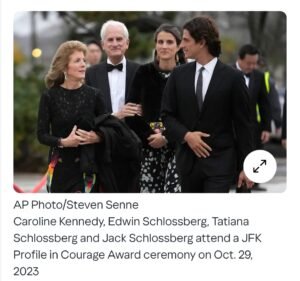
Schlossberg is survived by her husband, George Moran, whom she married in 2017, and their two young children — a son and a daughter. She also shared close bonds with her siblings, Rose and Jack Schlossberg. In her essay, she recounted how Rose donated stem cells for her first transplant, while Jack repeatedly asked doctors if he could help despite being only a partial match.
Throughout her illness, Schlossberg reflected deeply on family, legacy, and loss — themes long intertwined with the Kennedy family’s history. Her mother, Caroline Kennedy, was just five days shy of her sixth birthday when her father, President John F. Kennedy, was assassinated. Decades later, Caroline also lost her brother, John F. Kennedy Jr., in a 1999 plane crash.
In her writing, Schlossberg expressed sorrow over adding another tragedy to her family’s history. “Now I have added a new tragedy to her life, to our family’s life, and there’s nothing I can do to stop it,” she wrote.
She also addressed broader political and medical issues, including concerns about reproductive health care access, referencing comments and actions by her mother’s cousin Robert F. Kennedy Jr., and the Trump administration during her treatment.
Despite the gravity of her illness, Schlossberg focused much of her final months on love, motherhood, and memory. She wrote candidly about the pain of being separated from her infant daughter due to infection risks and her fear that her children might not remember her.
After being told she had “a year, maybe” to live, Schlossberg said her first thought was of her children. “My kids, whose faces live permanently on the inside of my eyelids, wouldn’t remember me,” she wrote.
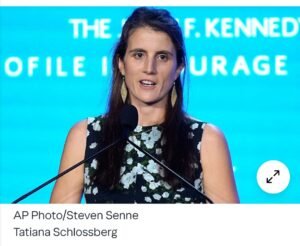
An accomplished scholar and writer, Schlossberg earned a bachelor’s degree in history from Yale University and a master’s degree in American history from the University of Oxford. She frequently wrote about environmental issues and had planned future research on ocean conservation before her illness.
“My son knows that I am a writer and that I write about our planet,” she wrote. “I remind him so that he will know that I was not just a sick person.”
In her final reflections, Schlossberg emphasized presence over fear. “Mostly, I try to live and be with them now,” she wrote. “I will keep trying to remember.”
Credit: people